

From Transition to Normalcy
By 2026, electric mobility in Singapore is no longer a pilot, a trial, or an early-adopter story. It is part of everyday life. What once required incentives and persuasion is now embedded into how people commute, how goods move, and how businesses plan operations. This shift reflects years of coordinated policy, infrastructure investment, and market adoption coming together at scale.
Under the Singapore Green Plan 2030 and the Land Transport Authority (LTA) Singapore’s long-term transport strategies, cleaner mobility has moved from ambition to baseline. By 2026, Singapore is firmly on track toward its goal of 100% cleaner-energy vehicles by 2040, with EVs already shaping daily movement across the island.
Cleaner Streets, Smarter Cities
Urban readiness is one of the clearest signs that EVs have become normal. Singapore’s charging network is scaling rapidly, expanding from around 2,100 charging points today to a nationwide target of 60,000 by 2030, overseen by the National Electric Vehicle Centre in collaboration with the National Environment Agency.
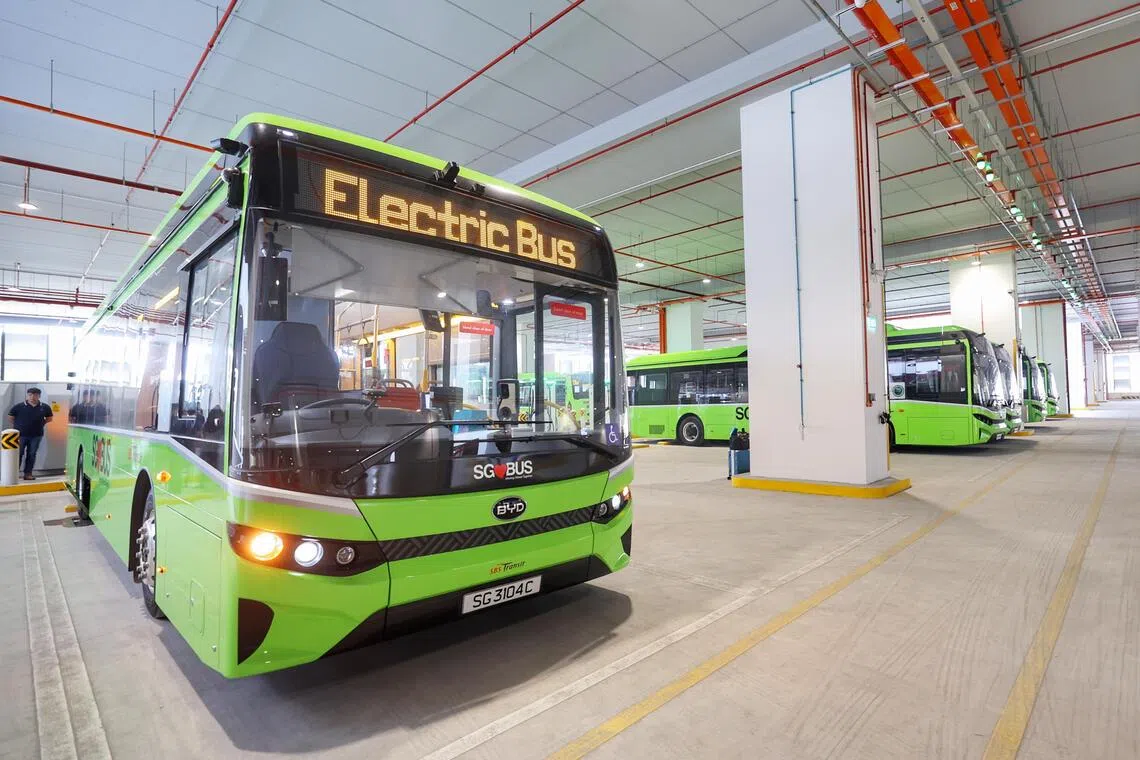
Public transport is also leading by example. By the end of 2026, 660 new electric public buses will begin operating, part of a wider plan for electric buses to make up half of Singapore’s public bus fleet by 2030. These deployments, coordinated by the Land Transport Authority, improve air quality, reduce noise, and demonstrate how electrification enhances—not disrupts—urban mobility.
EVs Embedded in Daily Operations
Beyond commuters, EV normalcy is most visible in logistics and commercial fleets. Shared mobility operators such as ComfortDelGro, Grab, BlueSG, and GetGo are electrifying fleets as part of everyday service delivery.
For businesses, EV adoption is increasingly driven by economics and resilience. Lower fuel costs, fewer moving parts, and reduced maintenance make electric fleets attractive in a high-density city. National incentive frameworks—such as the EV Early Adoption Incentive and the Vehicular Emissions Scheme—have accelerated uptake, but by 2026, many businesses are switching because EVs simply make operational sense.
Smarter Energy, Measurable Impact
EV normalcy is also about energy integration. Singapore’s broader energy reset includes targets to deploy at least 2 gigawatt-peak of solar capacity by 2030, supporting cleaner electricity for transport. Charging is no longer an isolated activity; it is increasingly paired with smart energy management and on-site generation.

This matters for ESG accountability. As sustainability disclosures become more structured, data matters. Electric fleets can record kilometres driven, energy consumed, and emissions avoided—turning daily movement into measurable performance aligned with national climate goals.
How Green Volt Supports Everyday EV Life
At Green Volt, we operate at this intersection of mobility, energy, and data. Our Higer electric vans are designed for Singapore’s urban logistics environment, delivering reliable range and payload for daily operations. When paired with solar systems from Energio Solar and smart charging infrastructure from EVOne Charging, fleets gain control over both transport and energy costs.

As 2026 unfolds, the story is clear: EVs are no longer a transition technology. They power everyday life—quietly, efficiently, and reliably. With the right partners and systems in place, businesses are not just adapting to this new normal; they are thriving in it.

