

Commercial EV Adoption Is Moving Into a New Phase
Electric mobility across Southeast Asia is gaining momentum, but the next stage is more complex than putting more passenger EVs on the road. Heavy commercial transport introduces a different question: can electrification support vehicles that businesses depend on for productive work every day?

The regional direction is increasingly clear. Singapore remained Southeast Asia's most advanced EV market, with EVs representing more than half of new car sales in early 2026. Charge+ COO and CCO Koh Xiao Han attributed Singapore's progress to the combination of long-term regulatory clarity, targeted incentives and coordinated charging deployment.
Electric Trucks Turn Sustainability Into an Operational Question
Heavy commercial vehicles cannot be evaluated using passenger-EV assumptions. Freight operators have to consider the work performed by each vehicle: routes, load requirements, charging windows, utilisation and the infrastructure available to keep vehicles operating.
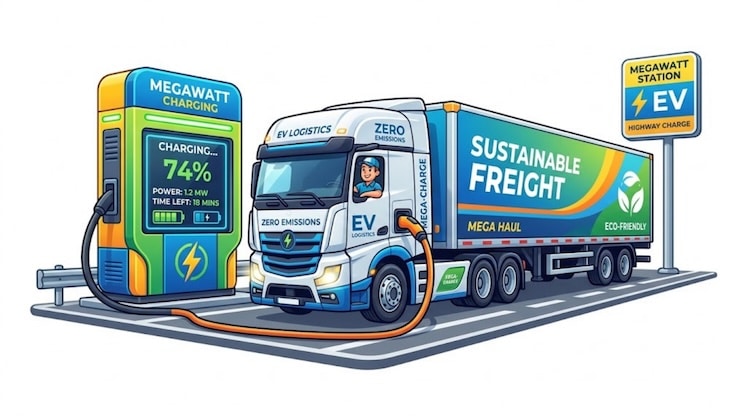
International commercial-vehicle data suggests electrification is moving beyond experimentation. The European Automobile Manufacturers' Association (ACEA) reported that EU registrations of electrically chargeable trucks increased 47.7% year-on-year during the first half of 2026, lifting their share from 3.6% to 4.8%. Diesel still represented 92.1%, so the transition remains at an early stage—but electric trucks are increasingly entering real procurement decisions.
Heavy-Duty EV Charging Is Becoming Part of Vehicle Strategy
Charging infrastructure is evolving alongside the vehicles. The research identifies commercial deployment of a 1.6 MW charging platform, while MAN has begun series production of MCS-ready electric trucks capable of charging at up to 750 kW. These developments do not mean every commercial fleet requires megawatt charging; they demonstrate how vehicle architecture and charging infrastructure are increasingly being planned together.

That distinction matters. Across Southeast Asia, grid access remains a significant infrastructure bottleneck. Industry representatives cited by Eco-Business noted that charging installations are increasingly reaching 360–480 kW, compared with the 50–60 kW chargers commonly installed a decade ago. Higher power can reduce charging time, but sufficient grid capacity, suitable sites and potentially load-management systems are prerequisites.
Southeast Asia Shows Why Infrastructure Must Scale With Demand
The Philippines illustrates another side of this transition. Its new Electric Vehicle Incentive Strategy (EVIS) provides a 60-billion-peso fiscal package intended to stimulate EV manufacturing, while EV sales increased 132.7% year-on-year to 31,381 units in the first half of 2026.

Yet the research also highlights persistent constraints around charging, supply chains, repair capability and infrastructure readiness. The broader lesson for commercial transport is important: incentives can accelerate a market, but sustainable fleet electrification requires an ecosystem capable of supporting vehicles throughout their operating lives.
Green Volt: Bringing Heavy Electrification Into Daily Operations
For Green Volt, cleaner heavy transport starts with matching electric mobility to the work businesses actually perform. The Higer H6T EV is purpose-built for fleet operators moving heavy freight, including logistics, distribution, construction and trade operations.
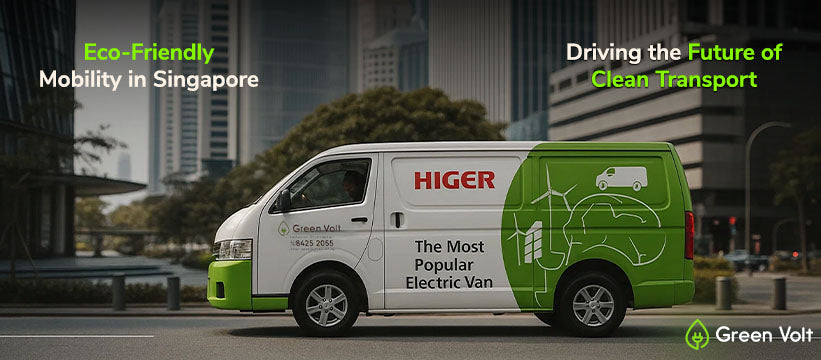
With a 2,540 kg payload, 3.85 m³ cargo capacity and 5,000 kg gross vehicle weight, the H6T brings electrification into a category where carrying capability and daily productivity matter.
The direction of the industry is increasingly systemic: vehicle, charging and energy planning need to work together. Green Volt's approach reflects that philosophy—connecting commercial EV solutions with charging through EVOne Charging and energy capabilities through Energio Solar.
Heavy transport electrification isn't simply the next EV category.
It is the next operational challenge to solve.

