

Infrastructure Is Only the Starting Point
An EV-ready city is often defined by the number of chargers installed. In Singapore, that number is scaling rapidly, with a national target of 60,000 charging points by 2030 and over 1,600 HDB carparks already equipped with chargers. EV adoption is accelerating alongside this growth, with 55% of new car registrations in January 2026 already electric.
But infrastructure alone does not define readiness. For fleet operators, the real question is whether that infrastructure supports daily operations reliably across routes, schedules, and energy demands.
True EV readiness is about consistency. It is the ability to charge when needed, where needed, without disrupting operations. This requires not just more chargers, but the right mix of charging types, locations, and energy capacity.
The Right Mix of Charging Enables Real Operations
Singapore’s charging ecosystem reflects this balance. AC charging (7.4–22kW) supports long-stay scenarios such as overnight depot charging, while DC fast charging (50–120kW) enables quick turnaround during operational hours.
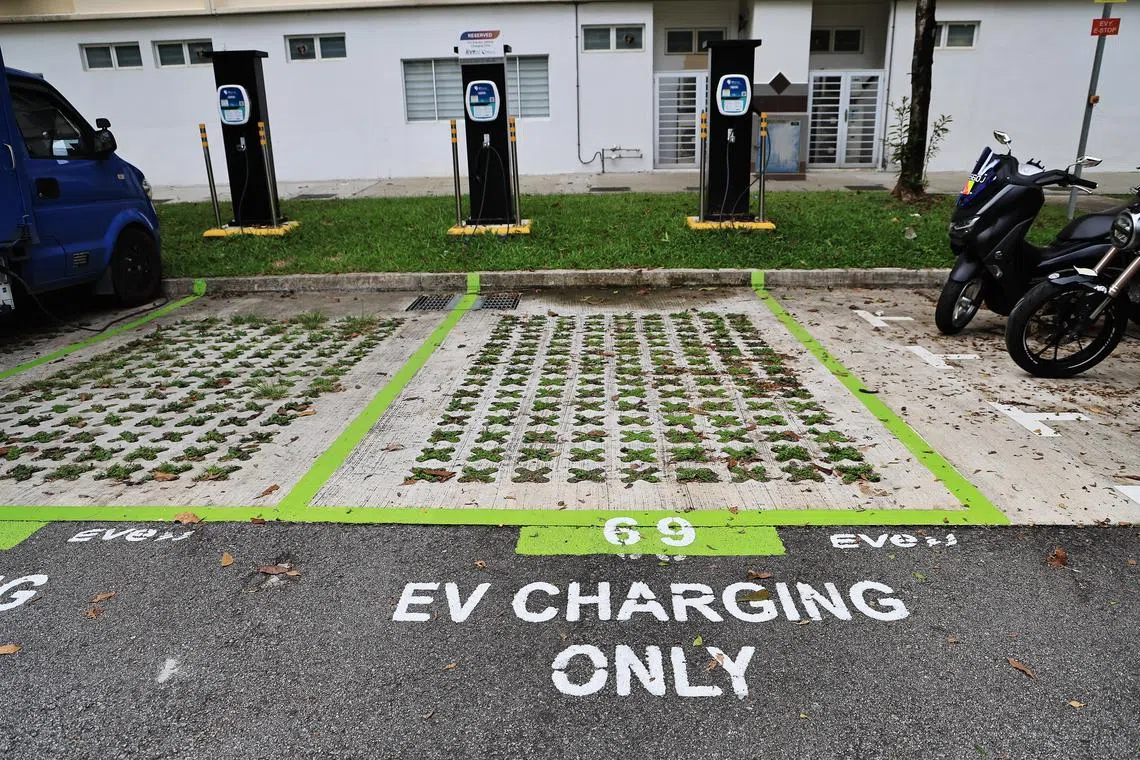
The expansion of fast-charging hubs highlights this shift. By early 2027, the first of several new hubs in HDB towns developed by Shell Singapore and SP Mobility will offer 50kW chargers capable of delivering around 100km of range in 30 minutes. These complement slower chargers, which take around 3.5 hours to deliver the same energy.
For fleet operators, this matters. It means vehicles can charge based on operational patterns—slow charging during idle hours, fast charging when turnaround is critical. EV readiness, therefore, is not about speed alone, but about flexibility.
Energy Systems and Planning Reduce Operational Risk
Behind every charger is a deeper requirement: electrical capacity and planning. Fast-charging hubs require direct connections to substations and more complex infrastructure, showing that EV readiness is as much about energy systems as it is about mobility.
Singapore’s approach reflects this. Agencies like the Land Transport Authority (LTA) Singapore and its subsidiary EV-Electric Charging (EVe) are not only deploying chargers but selecting sites based on grid capacity and proximity to daily activity hubs.

For businesses, this reduces uncertainty. A well-planned ecosystem means fewer disruptions, predictable charging access, and greater confidence in transitioning fleets at scale.
This is where integrated solutions matter. Combining vehicles with charging and energy systems such as solar integration through Energio Solar and smart charging infrastructure from EVOne Charging Pte Ltd allows businesses to manage both mobility and energy as one system, not separate components.
Why EV Readiness Matters for Fleet Operators
For fleet operators, EV readiness is ultimately about operational confidence. It determines whether electrification improves efficiency or introduces risk.
Vehicles must be compatible with existing infrastructure. Green Volt’s H5C and H5F electric vans support CCS2 AC and DC charging, ensuring seamless use across Singapore’s public and private charging networks. This compatibility allows fleets to tap into both slow and fast charging options without restriction.

Operational fit is equally critical. The H5C, with its 10 m³ cargo capacity and over 1-ton payload, supports high-volume logistics, while the H5F provides flexible transport for service teams and mixed-use operations. Both are powered by 70.47 kWh CATL LFP batteries, delivering durability, safety, and consistent performance.
In an EV-ready city, these capabilities translate directly into uptime, efficiency, and cost control.
From Infrastructure to Execution
A truly EV-ready city is not defined by ambition, but by execution. It is where infrastructure, energy systems, and vehicle technology come together to support real-world operations.

Singapore is building that foundation. For businesses, the opportunity is clear: electrification is no longer a future consideration.it is a present capability. With the right vehicles, charging strategy, and energy integration, fleet operators can move forward with confidence, turning EV readiness into operational advantage.

